
Understanding the Bulky Cycle on Washing Machines
The bulky cycle on a washing machine is made for heavy laundry like blankets, comforters. And large fabric items. It handles these loads better than normal cycles. This cycle uses more water and slower spin speeds to protect your bulky fabrics from damage.
Many modern washers have a specific bulky load washing setting to make sure big items get cleaned properly. Using this cycle means you do not have to worry about your heavy fabrics being ruined. For a deeper understanding of this mechanic, analyzing resources on bulky items washing function provides excellent foundational context.
The bulky cycle helps when washing heavy fabrics or large bedding by adjusting the water level and cycle duration. It is also called the heavy laundry wash setting or bulky load cycle on some machines.
Bulky Cycle vs Normal Wash: Key Differences
Normal wash cycles work well for regular clothes but may not clean bulky items fully. The bulky cycle uses more water to soak large fabrics deeply. Spin speed is lower to avoid damage and tangling.
Cycle duration is longer in the bulky cycle to give enough time for dirt to come out from thick and heavy items. This makes bulky cycle different from a normal wash.
Using the wrong cycle can cause poor cleaning or harm your washer. Always use the bulky cycle for large blankets or comforters to get the best results.
| Feature | Bulky Cycle | Normal Wash |
|---|---|---|
| Water Level | Higher to soak heavy fabrics | Standard for clothes |
| Spin Speed | Slower to protect items | Faster to remove water |
| Cycle Duration | Longer for deep cleaning | Shorter for regular clothes |
| Load Type | Heavy, large items | Normal laundry |
When washing bulky comforters, the bulky cycle balances cleaning and care. It avoids wear and tear common in regular washes.

For more on machine settings explained, visit our guide on how to work a maytag washing machine.
Tips for Washing Bulky Items Safely
Before washing bulky fabrics, check your washing machine load capacity. Overloading can damage your washer and clothes. Separate items if needed to avoid heavy load weight limits being exceeded.
Use the right laundry detergent for heavy fabrics and add fabric softener to keep items soft. Adjust the wash temperature based on care labels to avoid shrinking or damage.
Always follow large item washing instructions for each fabric type. Some bulky items need delicate cycle care, even if large.
Here is a quick checklist for washing bulky items:
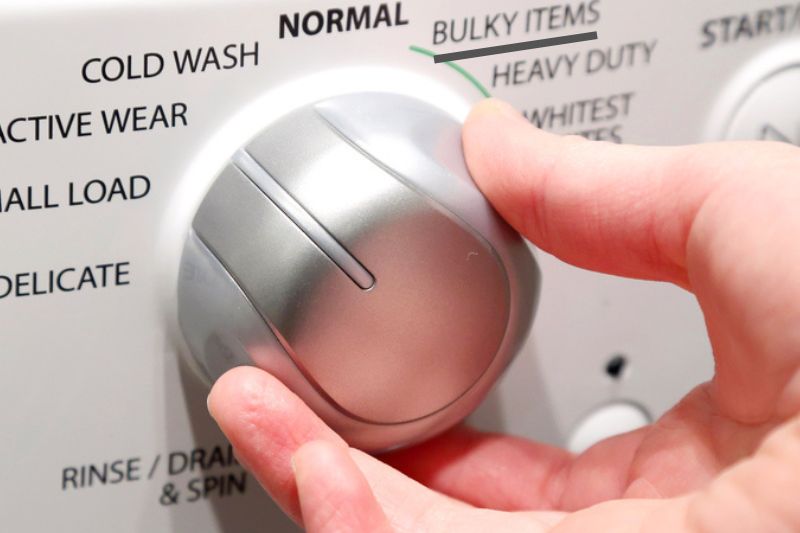
:max_bytes(150000):strip_icc()/how-to-select-the-correct-cycle-2145866_FINAL-10d1b95640284e0a8d01d4523455c7ee-25c018a4c0304212a13315b7ab181e33.png "How to Select Washer Settings for Clothes and Towels (Figure)")
- ✅ Check washing machine load capacity
- ✅ Use bulky cycle or heavy fabrics settings
- ✅ Select proper wash temperature
- ✅ Use suitable detergent and fabric softener
- ✅ Do not overload the washer
Proper handling of bedding in washing machines ensures freshness and longevity. For instance, washing large blankets or heavy comforters works best with the bulky cycle.
Washing Machine Maintenance for Bulky Loads
Bulky load washing can strain your machine. Regular cleaning and maintenance help keep it running well. Remove lint and debris frequently and clean filters as per the user guide.
Check the drum and agitator for damage after bulky washes. Keeping the washer balanced prevents shaking or noise. Understanding how to clean and deodorize your washer is essential to avoid buildup.
For detailed tips on cleaning your machine, see our article on how to clean and deodorize washing machine.
Energy use in bulky cycles can be higher due to longer wash times and extra water. Choosing energy-efficient settings helps reduce consumption without compromising cleaning.
Handling Specific Bulky Fabrics
Different bulky fabrics need different care. Cotton bedding is sturdy but can be large and heavy. Synthetic fabrics may need cooler water to avoid damage. Always read fabric care labels.
Some bulky items, like down comforters, require gentle washing and slow spin speeds to keep filling fluffy. Heavy blankets can tolerate more agitation but still benefit from the bulky cycle.
Knowing laundry cycles for heavy fabrics helps you pick the best wash for each item. Delicate cycles may work for bulky but fragile fabrics.
| Fabric Type | Recommended Cycle | Wash Temperature |
|---|---|---|
| Cotton Bedding | Bulky or Normal | Warm |
| Synthetic Fabrics | Bulky or Delicate | Cold or Warm |
| Down Comforters | Bulky with Gentle Spin | Cold |
| Heavy Blankets | Bulky | Warm |
Following washing large blankets instructions can prevent damage and keep your items clean. Adjust spin speed and water level according to fabric type for best results.
Conclusion
The bulky cycle on washing machines is designed for large, heavy fabrics like comforters and blankets. It uses more water, slower spins. And longer cycles to clean safely. Using this cycle protects your bulky items and your washing machine.
Knowing your washing machine load capacity and following bulky load washing tips helps avoid damage. Proper maintenance keeps your washer working well even with heavy fabrics.
For best care, always check washing instructions for your items and choose the right cycle. This way, your heavy fabrics stay clean and last longer.
Understanding the bulky cycle and how to wash bulky items is key to good laundry care in 2026. For a helpful guide on how to clean and deodorize washing machine, visit our detailed resource to keep your washer fresh and efficient.
Frequently Asked Questions
What is the bulky cycle on a washing machine?
The bulky cycle is a special setting designed for washing large, heavy items like blankets, comforters, and heavy fabrics that regular cycles can’t handle well.
Can I wash all bulky items in the bulky cycle?
Not all bulky items should be washed in the bulky cycle. Always check your washing machine’s load capacity and follow specific washing instructions for large items.
How is the bulky cycle different from a normal wash?
The bulky cycle uses more water, slower spin speeds, and longer cycle duration to safely clean heavy and large fabrics without damaging them.
Does washing bulky items use more energy?
Yes, bulky cycles generally use more energy due to increased water and longer wash cycle durations, but modern machines aim to optimize energy use.
How can I maintain my washing machine when washing bulky loads?
Regular cleaning, avoiding overloading, and following the washing machine user guide help maintain your washer when handling bulky loads.

Roger Jacobs is a seasoned appliance expert with over 15 years of experience in the washing machine industry. He specializes in product reviews, energy efficiency, and innovative washing technologies, providing users with trustworthy insights to make informed purchasing decisions.