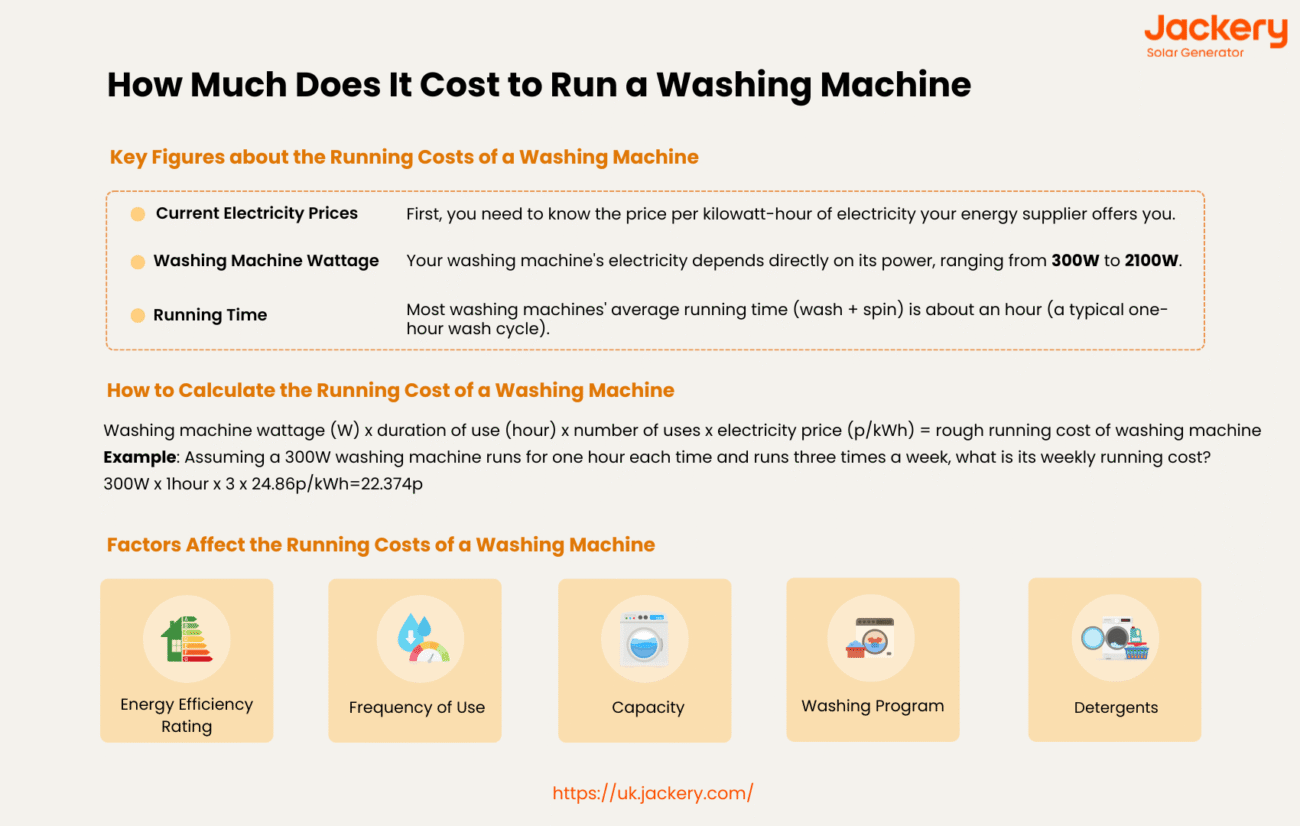
Ever stood by your washing machine wondering, how much does it cost to run a washing machine? The answer isn’t so cut and dry. It varies wildly depending on your machine’s efficiency, load size, water temperature, and local energy rates. Let’s punch through the mysteries and find what’s really burning your wallet. Spoiler: it’s not always the wattage but the habits that matter. 🚀
What Factors Determine Washing Machine Running Costs?
The price tag on running your washing machine stems from a blend of:
- • Electricity consumption — how many kilowatt-hours you use per wash.
• Water consumption — hot vs. cold water usage impacts heating costs.
• Detergent and maintenance — little but contributory costs.
• Frequency and load sizes — more cycles, more money.
Here’s the kicker: using hot water is a massive drag on your bill. When you crank hot cycles, the machine’s heater works overtime, gobbling electricity.
Typical Energy Use Per Cycle
Most machines operate around 0.5 to 1.5 kWh per wash, depending on settings. Eco-friendly modes dip closer to 0.3 kWh, while temperature-heavy cycles spike near 2 kWh. Washing a small load with hot water? Costly. Full cold load? Much cheaper.
Water Consumption Impact
Hot water isn’t cheap; heating it consumes a large part of your energy, making hot cycles significantly more expensive. Cold washes save on energy — just don’t guess if it’ll actually get your clothes clean.
How To Calculate Your Cost Per Wash
Ready to get real? Calculate like this:
- Find your wash cycle’s kWh consumption (usually in your manual or on the machine’s panel).
- Check your latest electricity bill to find cost per kWh.
- Multiply the kWh by your local electricity rate.
- Add hot water heating costs if applicable.
Example: A 1 kWh cycle at 15p per kWh = 15p per wash. Add heated water, maybe another 5-10p.
Energy Saving Tips to Slash Costs
- ✅ Run full loads—not half-filled machines.
✅ Wash with cold water unless heavily soiled.
✅ Use eco-mode settings.
✅ Maintain your machine to keep efficiency.
✅ Avoid unnecessary cycles and pre-washes.
✅ Upgrade to energy-efficient washers if budget allows.
Is an Energy-Efficient Machine Worth It?
Absolutely, especially if your laundry bills feel like a monthly heart attack. Modern washers with high energy ratings (A++ or above) cut costs noticeably. While the upfront expense can sting, the long-term savings usually pay off. Check devices’ energy labels and consider brands known for efficiency.
Other Hidden Costs to Consider
Besides electricity, water bills can climb with frequent or lengthy cycles. And don’t forget detergent expenses and potential repairs. A leaking valve or faulty motor hikes running costs indirectly. Keeping it in shape is key, and that’s a bit of Laundry Care that pays dividends.
“Think of the guy running a pizza joint on 4th Street. He upgraded to efficient appliances, cutting energy bills so sharply he reinvested the savings into better ingredients. You can own your home laundry like that—smart and thrifty.”
Real-World Example: UK Washing Costs in 2026
UK households paying around 20p/kWh face washing machine costs roughly from 10p to 30p per wash cycle, varying with water heating and cycle choice. Some UK-based research drills into per-hour and per-cycle costs to reveal how small habits make stubborn differences. Selecting cold, full loads is not just frugal advice — it’s financial sense. Read more about those UK stats at costs of running washing machines per hour in the UK.
Checklist: How To Keep Washing Machine Costs Low
- ✅ Use eco settings and cold water.
✅ Load machine fully to optimize energy.
✅ Choose newer, energy-efficient models.
✅ Clean filters and service the machine yearly.
✅ Avoid extra rinse cycles unless necessary.
✅ Monitor your electricity tariffs and switch if better deals exist.
Comparison Table: Cost Per Wash by Cycle Type
| Cycle Type | Energy Use (kWh) | Estimated Cost Per Wash (20p/kWh) | Water Temp |
|---|---|---|---|
| Eco Cold Wash | 0.3 | 6p | Cold |
| Regular Mix | 0.8 | 16p | Warm |
| Hot Cycle | 1.5 | 30p | Hot |
| Quick Wash | 0.5 | 10p | Cold/Warm |
When Should You Call a Technician?
Notice unusual noises, leaks, inefficiencies, or sudden hikes in power bills? Don’t DIY unless you know circuits and plumbing inside out. For serious issues affecting costs, a pro’s inspection is worth every penny. Keeping your machine in shape avoids ugly surprises on your bills.
Like all major appliances, your washing machine deserves respect, care, and smart usage. How much does it cost to run a washing machine? More than you think if ignored, way less if treated well.
For a deeper dive into cost-saving laundry tips and how simple shifts in routine slash expenses, check the practical guidance from experts analyzing washing machine costs and running expenses. These insights reinforce the mantra: small smart moves, big savings.

Source: www.thesun.co.uk

Source: homeguide.com
Frequently Asked Questions
How much electricity does a washing machine use per cycle?
On average, it uses between 0.3 and 2 kWh depending on temperature settings and cycle length.
Is it cheaper to wash clothes in cold water?
Yes, cold water cycles consume far less energy, as no extra heating is involved.
Does running a washing machine with a full load save money?
Absolutely. Full loads make the most of each cycle’s energy and water use, reducing cost per kg of laundry.
How can I reduce my washing machine’s energy costs?
Use eco and cold cycles, maintain your machine, wash full loads, and avoid unnecessary extra rinses.
Are newer washing machines more cost-effective?
Yes, newer models with high energy efficiency ratings reduce electricity and water usage significantly.
When should I call a professional for washing machine issues?
If you notice leaks, abnormal noises, or rising electricity bills, a technician can diagnose and fix problems to prevent further costs.
What hidden costs should I consider besides electricity?
Include water usage charges, detergent, repairs, and maintenance expenses when assessing total running costs.

Tyrone Jacobs is passionate about reducing household carbon footprints without sacrificing cleanliness. Her articles focus on high-efficiency (HE) machines, low-water washing techniques, and DIY natural machine-cleaning solutions. If you want to lower your utility bills and keep harsh chemicals out of your drain hoses, Tyrone Jacobs is your go-to expert.