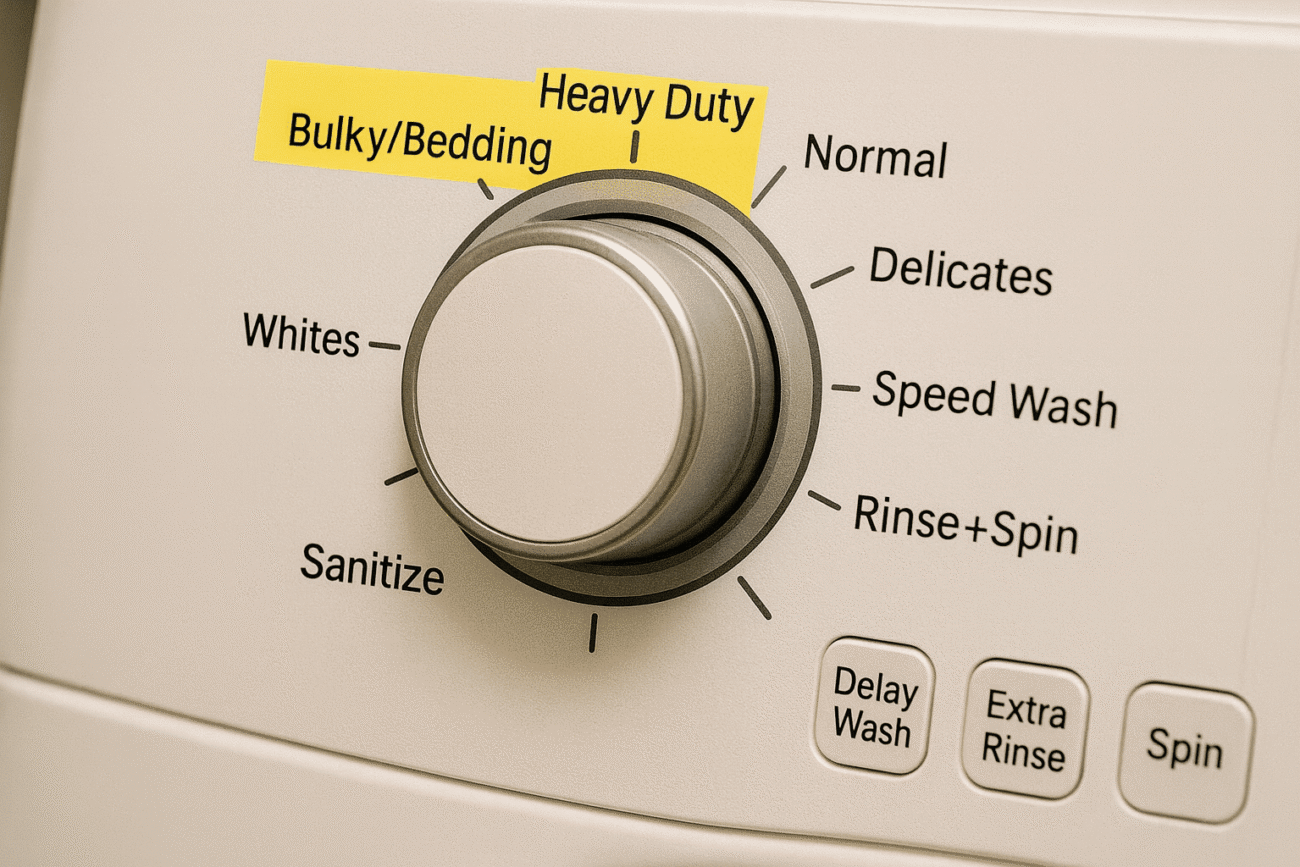
Ever stared at your washing machine dial and wondered, “What does bulky mean on a washing machine”? That bulky setting isn’t just arbitrary jargon it actually serves a crucial purpose for your laundry routine. Think about tossing in your king-sized comforter or that giant winter coat. Standard cycles just won’t cut it—they struggle to clean big and heavy items efficiently without damaging the fabric or machine.
Bulky cycle is specially designed to handle large, oddly shaped laundry items like blankets, pillows, curtains, and heavy jackets. It uses longer wash times, slower spins, and extra water to thoroughly clean bulky fabrics without overstraining your washer. Using this mode properly can extend your appliances’ life and keep your large fabrics fresh and intact.
Why Does Your Washing Machine Have a Bulky Setting?
Not all clothes are created equal. Your favorite shirt or jeans are simple to wash, but bulky items pack volume that disrupts normal cycles. Without a special setting, the machine might struggle to balance the load, leading to poor wash quality, excessive wear on both fabric and washer, or even mechanical breakdowns.
Bulky setting addresses these challenges by:
- Increasing water volume to soak thick fabrics deeply
- Reducing agitation speed to prevent fabric stretching or tearing
- Slowing spin cycles so heavy loads don’t throw the washer off balance
- Extending wash duration for a thorough cleanse
Typical Bulky Items Ideal for This Cycle
This setting shines with items like:
- Comforters and duvets
- Heavy blankets or throws
- Cushions or pillows (washable ones)
- Winter coats and parkas
- Large curtains and drapes
Attempting to wash these in normal cycles risks poor cleanliness and fabric damage.
For example, a king-sized down comforter requires careful water soaking and slow spinning to avoid lumps and fill displacement. Imagine the disaster if spun too fast — the whole comforter could bunch up and jam the machine.
How to Use the Bulky Cycle Effectively?
So, you know bulky means big and heavy, but how to really nail its usage? Here are some hands-on pointers:
- Check load weight and size: Don’t cram more bulky items than your machine’s listed capacity.
- Distribute evenly: Place bulky items evenly around the drum to keep the balance stable.
- Use appropriate detergents: Leverage detergents designed for heavy fabrics to break down oils and dirt better.
- Skip overloading: Overstuffing can cause fabric strain and mechanical faults.
- Select extra rinse: Helps remove detergent residues from thick textiles.
- Pair lightly soiled with deeper cycles: Bulky settings usually assume dirtier items needing more thorough washing.
Common Mistakes When Washing Bulky Items
- Using normal cycles for heavy bulky fabrics, leading to uneven cleaning.
- Ignoring machine capacity limits, causing imbalance and noisy spins.
- Forgetting fabric care labels and washing unsuitable items.
- Failing to secure heavy zippers or fasteners before washing.
These slip-ups cause mechanical wear, fabric shrinkage, or ruined washes. Respecting the unique needs of bulky loads protects both clothes and your appliance.
Understanding Washing Machine Settings and What Bulky Means
Bulky mode isn’t standalone; it interacts with various machine features:
- Spin Speed: Usually lower to prevent unbalanced loads.
- Water Temperature: Moderate to hot depending on fabric.
- Cycle Duration: Extended to allow thorough cleaning.
- Extra Water: Added automatically for bulky textiles.
This cocktail ensures deeper penetration of detergent and hassle-free spinning.
Some modern washers have smart sensors to detect bulky loads and autocorrect the settings, adding convenience. To understand your model’s capabilities, check the Whirlpool guide on washing large loads or bulky items.
When Should You Avoid Using Bulky Cycles?
Not every heavy item needs this cycle. For slightly bulky fabrics that are light or loosely woven, this setting might be overkill—potentially causing fabric wear due to longer, rougher cycles.
Also, items labeled ‘dry clean only’, fragile upholstery, or non-washable down products should NEVER be tossed in, bulky cycle or not.
Alternative Care Tips
- Spot-clean stains first
- Use professional cleaning for delicate bulky goods
- Hand wash small bulky items for gentleness
Bulky vs. Heavy Duty: What’s The Difference?
People often confuse bulky with heavy-duty. The difference? Heavy-duty targets tough stains on regular or sturdy fabrics, not necessarily oversized items. Bulky focuses on size and weight, ensuring large items get the space and gentle handling they need.
Think of it like washing a muddy work shirt (heavy-duty) vs. a plush duvet (bulky). Both need different cycle engineering to get clean without damage.
Impact of Bulky Loads on Your Washing Machine Longevity
Mismanaging bulky loads is a common cause for washer wear. Unbalanced bulky loads can increase vibration and strain motor bearings and suspension systems.
Following best bulky washing practices improves your machine’s lifespan and avoids costly repairs.
Regular maintenance is crucial. Check your appliance manual or reliable sources like the Southern Living article on bulky items setting for expert insights and precautions.
Tips for Maintaining Bulky Fabrics After Washing
- Air dry whenever possible to avoid heat damage
- Shake or fluff items post wash to restore loft
- Use fabric-safe stain removers before washing
- Store bulky fabrics folded, avoiding compression
🚀 Summary: What Does Bulky Mean On A Washing Machine?
In essence, bulky means your washer is set up to handle large, heavy items safely and effectively. It adjusts water, agitation, and spin settings to clean without damaging fabric or machine parts. Using this cycle properly is essential to avoid common laundry mistakes and preserve your appliances and textiles.
Remember, not all items labeled bulky require this cycle, and washing instructions must be followed closely. By mastering this cycle, your laundry routine will be smarter, safer, and more efficient.
Source: home-tech.com

Source: www.youtube.com
:max_bytes(150000):strip_icc()/how-to-select-the-correct-cycle-2145866_FINAL-10d1b95640284e0a8d01d4523455c7ee-25c018a4c0304212a13315b7ab181e33.png "What Does Bulky Mean On A Washing Machine 4")
Source: www.thespruce.com
Frequently Asked Questions
What types of items should I wash using the bulky cycle?
Bulky cycles are designed for large, thick, or heavy fabrics such as comforters, heavy blankets, pillows, winter coats, and curtains that don’t fit well in a standard cycle.
Can I wash multiple bulky items at once in the bulky setting?
It’s best to avoid overloading. Wash one or two bulky items per cycle, ensuring the machine remains balanced for effective cleaning and to avoid damage.
Is the bulky cycle suitable for delicate fabrics?
No, delicate fabrics require gentler cycles. The bulky setting uses more water and longer times which could damage delicate items.
What happens if I use a regular cycle for bulky items instead?
Regular cycles often don’t provide enough water or the right agitation, resulting in poor cleaning and potential fabric or appliance damage due to unbalanced loads.
Does every washing machine have a bulky cycle?
Not all machines have a dedicated bulky cycle, but many include similar options like bedding or heavy load settings that serve the same purpose.
How does the bulky cycle protect my washing machine?
It adjusts spin speed and load balancing to minimize vibrations and motor strain, extending the machine’s lifespan and preventing mechanical issues.

Tyrone Jacobs is passionate about reducing household carbon footprints without sacrificing cleanliness. Her articles focus on high-efficiency (HE) machines, low-water washing techniques, and DIY natural machine-cleaning solutions. If you want to lower your utility bills and keep harsh chemicals out of your drain hoses, Tyrone Jacobs is your go-to expert.