Ever wrestled with that bulky beast they call a wash machine and wondered just how much does a wash machine weigh? Before you start blaming your back soreness on the laundry day grind, let’s bust open the mystery behind washer weights. 🚀 Whether you’re relocating, shopping for a new unit, or just curious, knowing the weight can save you time, effort, and maybe a trip to the chiropractor. Washing machines, as it turns out, pack on pounds for a reason – motor power, capacity, and build quality all weigh in.
Understanding Washer Types and Their Weights
Not all washing machines were made equal. Two common contenders duke it out in homes worldwide: front loaders and top loaders. Each has distinct weight ranges thanks to design and engineering choices.
Front Load Washers
Front loaders, known for energy efficiency and gentle fabric handling, usually weigh between 165 to 220 pounds (75 to 100 kg). Their hefty-frame includes a drum, a robust motor, and a strong tub to combat spin-cycle vibrations. For example, a standard model on the market in 2026 tips the scales closer to 180 pounds because it integrates soundproof insulation and a durable steel drum. Check out Consumer Reports’ guide on choosing a washing machine to see weight considerations alongside features here.
Top Load Washers
Top loaders often weigh a bit less, ranging from 110 to 160 pounds (50 to 72 kg). The simpler design and lighter tub construction contribute to this. However, newer high-efficiency top loaders might come with additional weight due to advanced sensors and water-saving tech. Practical tip: always check the manufacturer’s specs before moving day to avoid surprises.
Key Factors Influencing Washing Machine Weight
- Load Capacity: Larger machines designed for bigger loads naturally carry more iron and steel.
- Material Quality: Premium steel drums and reinforced frames add weight but improve longevity.
- Added Technology: Features that enhance washing cycles often mean more parts and some extra pounds.
- Energy Efficiency: New 2026 models balance insulation and motor optimization, slightly shifting weight trends.
How Much Does a Wash Machine Weigh by Size and Capacity?
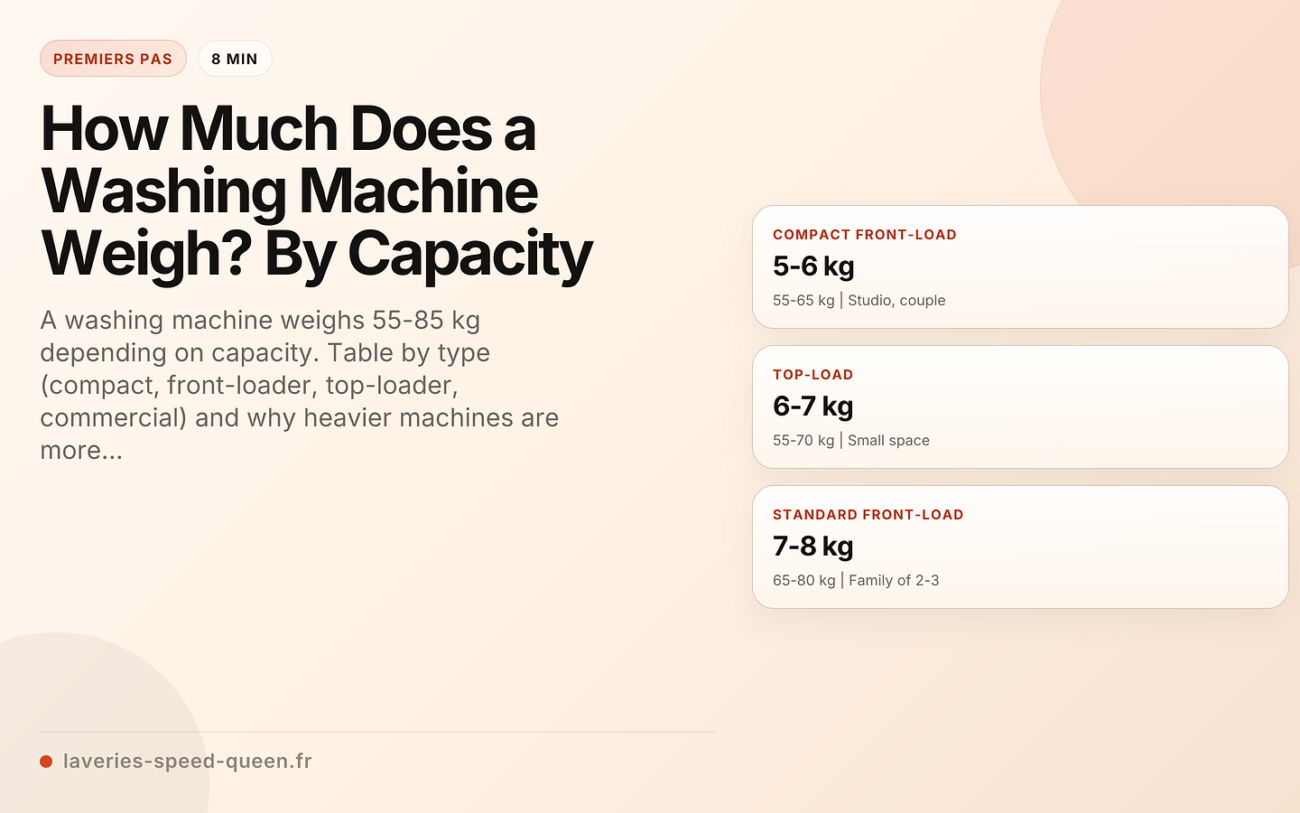
Load size matters seriously. Compact washers, often sold for apartments or small homes, can be as light as 70 to 100 pounds (32 to 45 kg). Medium and large-size washers push beyond 150 pounds regularly. Not sure about yours? Laveries Speed Queen highlights weights by type in their 2026 update with handy tables.
Implications for Moving and Installation
Ever tried sliding a typical washer alone without damaging your floor or your spirit? Knowing the exact weight is critical. A 200-pound machine doesn’t just sit heavy; it needs two sturdy helpers, proper equipment, and strategic planning. Consider renting a dolly designed for appliances or hiring pros. Mishandling can void warranties and cause costly repairs. If moving between floors, measure doorways and stair landings against machine dimensions and weight.
Weight vs. Durability: Does Heavier Mean Tougher?
Here’s a hot debate at home improvement parties: does a heavier washing machine last longer? Some argue weight equals sturdier build quality, citing the mass of steel and insulation dampening vibrations. Yet, Houzz discussions suggest weight alone isn’t always a reliability indicator see this thread. Instead, how a machine is engineered and maintained tells the true story.
Energy Efficiency and Weight Trends in 2026
The 2026 market sees an uptick in lightweight, energy-efficient washers without sacrificing durability. Manufacturers use ultra-durable plastics combined with reliable motors to shave off weight. While they might look lighter, these machines can perform as well or better than heavier, older models. It’s like trading a heavy old pickup for a sleek electric car—less weight, more punch.
How To Check Your Wash Machine’s Weight Safely
Want to measure at home? Use a bathroom scale under the machine (ask a helper for safety). For larger units, check manufacturer specs or look inside the user manual. Always unplug and drain the washer to avoid accidents. This method beats guessing, especially if you’re unsure of your machine’s model year.
Common Mistakes When Considering Washing Machine Weight
- Assuming heavier machines are always better without checking features.
- Ignoring the weight limits when moving machines, risking injury or damage.
- Overlooking installation specs related to floor support and vibration control.
2026 Buying Tips Considering Size and Weight
- Prioritize capacity and footprint over sheer weight.
- Look for certifications on energy and water efficiency.
- Double-check installation conditions—floor type, voltage, and space.
- Read reviews focusing on machine longevity and maintenance ease.
Summary: Weigh This Before You Buy
So, how much does a wash machine weigh? It ranges widely based on type, size, and build—from 70 pounds to well over 200 pounds. This influences installation, moving logistics, and overall user satisfaction. Your perfect machine balances weight, washing capacity, and features. Remember, the heft is there for a reason: quality, durability, and quiet performance. Knowing your machine’s weight will help you plan better and avoid surprises.
Thinking about details like this means you’re no rookie in appliance care. For a deeper dive into washing machine load sizes, check out this exhaustive guide on calculating tub capacity here. Weight matters, but function and fit matter more!

Source: prudentreviews.com
Source: inthewash.co.uk
Frequently Asked Questions
What is the average weight of a standard washing machine?
The average weight of a standard washing machine typically falls between 150 and 200 pounds, depending on the type and features.
Do front load washers weigh more than top loaders?
Yes, front load washers usually weigh more due to their construction and additional insulation, weighing roughly 165 to 220 pounds compared to 110 to 160 pounds for top loaders.
Can the weight of a washing machine affect its durability?
Weight can influence durability since heavier machines often have sturdier components, but build quality and maintenance are more significant factors.
How should I prepare for moving a heavy washing machine?
Ensure you have enough help, use appliance dollies, secure loose parts, and protect floors to safely move heavy washers without damage.
Are lightweight washing machines less efficient?
Not necessarily. Modern lightweight washers use advanced materials and technology to maintain energy efficiency and performance.
Where can I find the exact weight of my washing machine model?
Check the user manual, manufacturer website, or product specifications. You can also verify model weight through online appliance buying guides and reviews.

With over 15 years of hands-on experience in the appliance repair industry, Erick Jackson is WashingMachineCare’s resident gearhead. He holds multiple manufacturer certifications and specializes in breaking down complex mechanical failures into easy, step-by-step DIY fixes. When he’s not covered in grease, Erick Jackson enjoys restoring vintage washing machines to their former glory.