Ever struggled moving that bulky laundry appliance? Wondering exactly how much do a washing machine weigh? It’s not just about guessing—it impacts your moving strategy, safety, and even installation decisions. 🚀 Most washing machines weigh between 100 to 170 pounds, but this range shifts a lot depending on the type, size, and brand you’ve chosen for your home. It’s no secret that knowing precise weights can avoid serious backaches and damage during transport.
- Standard washing machines weigh ~100-170 lbs
- Front-load washers usually weigh more than top-loaders
- Compact washer models are lighter, around 80-100 lbs
- Built-in or washer-dryer combos may surpass 200 lbs
Understanding these specifics prepares you better for your next laundry day switch or house move. Curious about specific types? Let’s dig deeper into what determines washing machine weight and why it matters.
What Determines Washing Machine Weight?
Several factors pack the scale in the washing machine world. Size is an obvious one — bigger machines mean bigger metal, electronics, and more water capacity. But there’s more beneath the surface:
- Type: Front loaders pack heavier materials and more complex mechanics, making them heavier than their top-loading counterparts.
- Capacity: Bigger capacity means more steel inside the drum and frame, bulking up the machine.
- Material: Some brands opt for lighter composites; others stick with heavy-duty steel.
- Extra Features: Steam cycles, built-in heaters, and advanced motors add pounds.
Front Load vs. Top Load Machine Weight
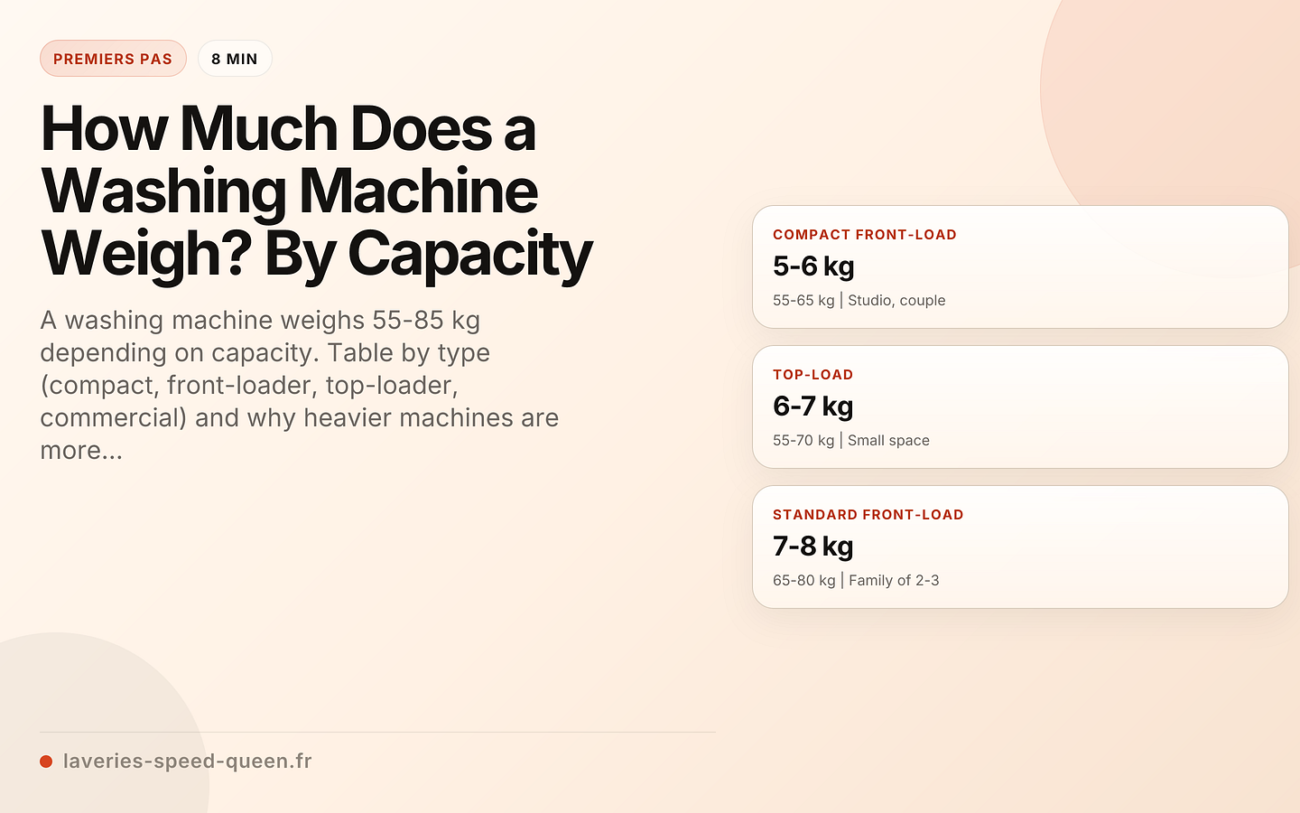
Front-loading washers generally weigh between 140 and 170 pounds due to their robust frames and horizontal tubs. Top-loading machines? Usually lighter, around 100-130 pounds, with simpler vertical drums. This detail is crucial if you’re planning to install upstairs or lift by hand.
How Much Do Washing Machines Weigh by Size?
| Washing Machine Size | Weight Range (lbs) | Typical Use |
|---|---|---|
| Compact/Small (2.0 – 2.5 cu ft) | 80 – 110 | Small apartments, limited space |
| Standard (3.5 – 4.5 cu ft) | 110 – 160 | Average household laundry |
| Large Capacity (5.0+ cu ft) | 150 – 200+ | Families, heavy laundry demand |
Why Knowing Washing Machine Weight Matters in 2026
Think of the local mover on 5th Street who underestimated his load. Injuries and damaged gear resulted simply because the washing machine weight was overlooked. It’s 2026, and modern appliances come heavier with smart features and stronger engineering. Being aware prevents avoidable accidents, ensures you pick the right moving equipment, and saves money on professional help.
Moving and Installation Tips
- Use appliance dollies with secure straps to prevent tipping.
- Always disconnect power and water supply before moving.
- Consider hiring professionals for front-loaders or heavier setups.
- Secure the drum lock during transport to avoid internal damage.
If you’re intrigued in the technical specifics on capacities and weight calculations, the comprehensive washing machine load size guide by The Spruce explains it in more detail on sizing formulas.
Variations by Brand & Model — What to Expect?
Not all washing machines weigh the same across brands. Some prioritize lightweight design for portability, while others use heavier components for durability. For example, a Samsung front loader might weigh slightly more than a similar-sized LG due to differences in motors and frame materials. Keep your specific building structure and flooring in mind when selecting a model.
Handling Your Washing Machine Safely
🚀 No one enjoys back pain after lifting an appliance. It’s smart to team up or get tools designed for these loads. Proper lifting techniques include bending your knees, keeping your back straight, and not twisting your torso while lifting.
“Don’t guess the weight—know it to protect your health and your appliance.” – Appliance Moving Expert
Common Washing Machine Weight Ranges Summary
- Compact washers: 80-110 lbs
- Top-loading washers: 100-130 lbs
- Front-loading washers: 140-170 lbs
- Washer-dryer combos: 160-220 lbs
What About Washing Machine Weight and Energy Usage?
Heavier machines often have larger motors consuming more energy, but many recent models balance weight with energy efficiency innovations. If you’re eco-conscious, focus on machines labeled with Energy Star certifications and check the weight against energy performance.
Handling Washing Machine Weight When Buying New
Before clicking buy, consider if your home can safely support the weight. Older homes with weak floor joists may require reinforcements for heavy models. It’s best to consult specialists if you plan installing an ultra-large washing machine in sensitive environments.
For a buyer’s perspective, Consumer Reports offers solid advice on choosing washers tailored to your laundry needs while considering weight implications in their washing machine buying guide.
Conclusion
So, back to the essential question: How much do a washing machine weigh? It varies broadly, largely influenced by size, type, and brand. Whether moving, buying, or installing, this knowledge keeps you safe, efficient, and informed in 2026’s evolving appliance landscape. Whether you’re hauling a compact unit or a hefty front loader, plan smart—your back and your wallet will thank you.

Source: prudentreviews.com

Source: hernebaydomestics.co.uk
Frequently Asked Questions
What is the average weight of a standard washing machine?
The average washing machine weighs between 100 and 170 pounds, depending on its size and type.
Are front-loading washing machines heavier than top-loading ones?
Yes, front-loaders tend to be heavier because of their solid build and horizontal drum design.
Can I move a washing machine by myself weighing over 100 pounds?
It’s risky to move heavy washing machines alone. Using dollies, getting help, or hiring professionals is recommended.
Do built-in washing machines weigh less than freestanding ones?
Built-in machines can be heavier due to integrated features and extra frame reinforcements but vary by model.
How does washing machine weight affect energy consumption?
Heavier washing machines often have larger motors; however, energy efficiency depends more on technology than weight alone.
What should I do if my floor can’t support a heavy washing machine?
Consult a structural professional to reinforce your floor before installing a heavy appliance to avoid damage and safety risks.

Tyrone Jacobs is passionate about reducing household carbon footprints without sacrificing cleanliness. Her articles focus on high-efficiency (HE) machines, low-water washing techniques, and DIY natural machine-cleaning solutions. If you want to lower your utility bills and keep harsh chemicals out of your drain hoses, Tyrone Jacobs is your go-to expert.