
Understanding Washing Machine Energy Use
The energy used by a washing machine depends on many factors. These include the machine’s power rating, the type of wash cycle, water temperature. And load size. Most washing machines have a power rating between 400 and 2000 watts. This rating shows how much electricity the motor and heating system use.
Industry consensus indicates that heating water accounts for about 90% of the energy used in a washing cycle. Therefore, choosing cold water washes can significantly reduce energy consumption. Additionally, longer wash cycles use more electricity. So knowing how long the spin cycle on a washing machine lasts helps in managing total energy use.
For a deeper understanding of this mechanic, analyzing resources on washing machine wattage and energy use provides excellent foundational context.
Energy Efficiency Ratings and Their Impact
Energy star washing machines meet strict energy efficiency standards. These machines use less electricity and water than older models. High efficiency washing machines often use advanced motor types and better water management to save power. They also include eco-friendly mode or eco mode settings that reduce energy use without harming fabric care.
The energy efficiency rating is a helpful guide when shopping for a new washing machine. It shows how much energy the machine uses yearly based on average cycles. Choosing machines with better ratings lowers your household energy consumption and your electricity bill.
Smart washing machines energy features add value by adjusting the wash cycle based on load capacity and fabric type. This optimization helps reduce unnecessary energy use while keeping clothes clean.
Electricity Costs of Washing Machines
Calculating the daily washing machine energy cost requires knowing the machine’s kWh usage and your electricity tariff. If a washing machine uses 1 kWh per cycle and your electricity cost is 15 cents per kWh, each wash costs about 15 cents. Reducing the number of washes or using energy saving settings can lower these costs.
Load size also matters. Washing full loads rather than small ones saves energy and water. Avoid running half-empty machines. Another factor is standby power. This is the energy used by the machine when turned off but still plugged in. This can add to your electricity bills over time.
Using an energy consumption meter or a smart meter can help track your washing machine’s power usage. This data helps make informed decisions on how to reduce laundry electricity savings.
 "How Many Watts Does A Washing Machine Use? | EnergySage (Figure)")
Washing Machine Water Usage and Energy
Water usage and energy use are closely linked. Heating more water requires more energy. So washing machines that use less water tend to consume less electricity. Front-loading washing machines typically use less water than top-loading washing machines. This makes front loaders more energy efficient overall.
The impact of wash cycle length is also important. Shorter cycles use less water and energy. Many modern machines offer quick wash or eco mode options that cut cycle times. These modes save energy and reduce water usage without sacrificing cleaning power.
Choosing the right detergent for your washing machine can also improve energy efficiency. Some detergents work better in cold water, allowing you to avoid hot washes that consume more electricity.
Top Energy Saving Laundry Tips for 2026 🚀
Saving energy in laundry routines is easy with the right habits. Here are some tips to help:
- ✅ Wash full loads to maximize energy use per cycle.
- ✅ Use cold water washes whenever possible.
- ✅ Choose eco mode or energy saving settings on your machine.
- ✅ Limit wash cycle length to what is needed for the fabric.
- ✅ Consider upgrading to Energy Star certified or high efficiency washing machines.
Many users find that following these tips can lower their washing machine energy consumption by up to 30%. This translates into real savings on the electricity bill and less environmental impact.
For more advice on reducing water use, see our guide on how much water does the washing machine use.
Energy Consumption Comparison of Washing Machine Types 🔢
The table below compares average energy use for common washing machine types and settings. It highlights how different factors affect consumption.
| Machine Type | Wash Cycle | Water Temp | Typical kWh Usage |
|---|---|---|---|
| Front-loading | Normal | Cold | 0.3 kWh |
| Front-loading | Normal | Hot | 1.0 kWh |
| Top-loading | Normal | Cold | 0.5 kWh |
| Top-loading | Normal | Hot | 1.5 kWh |
| High Efficiency | Eco Mode | Cold | 0.25 kWh |
The data shows front-loading machines generally use less energy. Using cold water also cuts electricity use by more than half compared to hot water washes. Eco mode settings further reduce kWh usage.
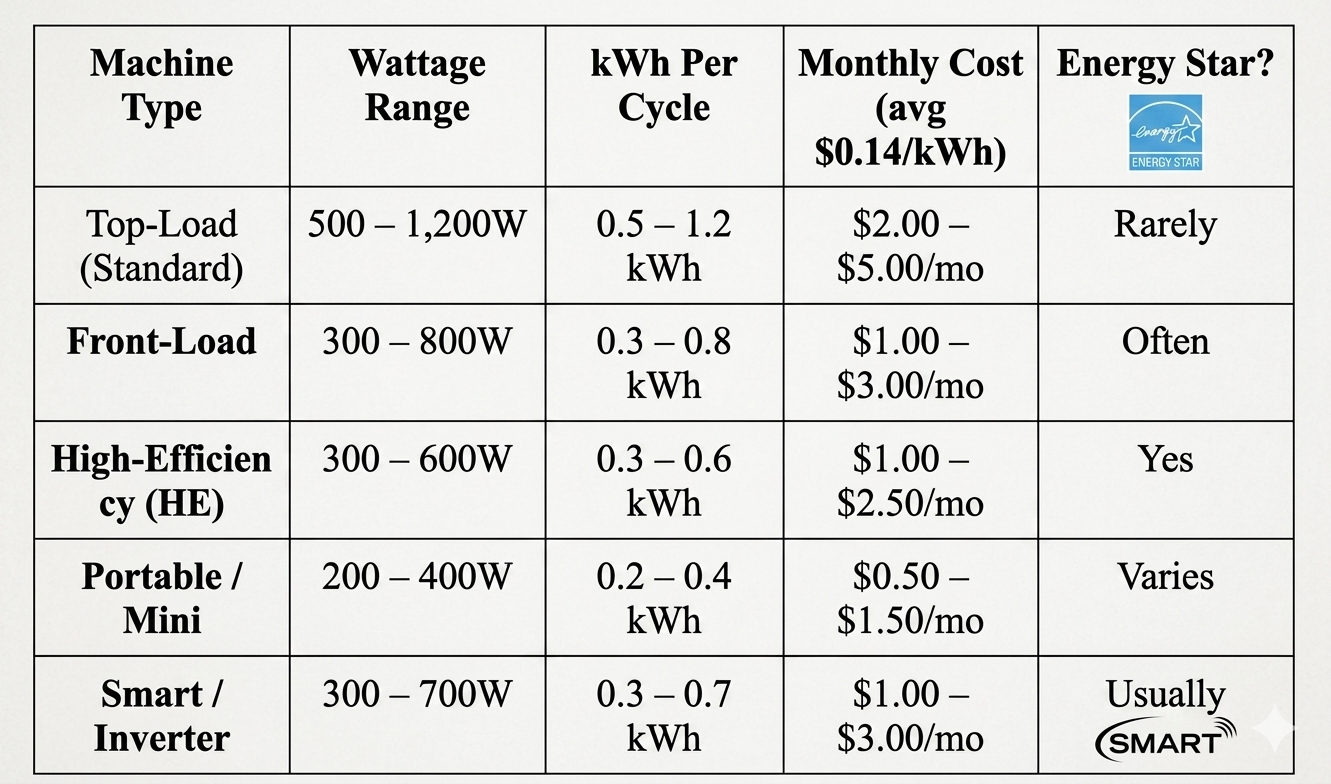
Using this info helps you choose the best washing machine and settings for your needs and budget.
Smart Washing Machines and Energy Saving ⚙️
Smart washing machines are gaining popularity in 2026. They connect to apps and smart meters to monitor energy use. This lets you track how much power each wash consumes. Some models adjust wash length and water temperature automatically based on load size and fabric type.
By using sensors and AI, smart washers optimize energy efficiency while delivering great cleaning. They also send alerts to remind you when maintenance is needed to keep the machine running efficiently.
Smart meters provide real-time data on household energy consumption. Linking your washing machine to this system helps you manage overall electricity use better.
Conclusion: Managing Washing Machine Energy Use Wisely ✅
Washing machines are essential appliances but can use a lot of energy. Understanding the kWh usage of different models and settings helps you save electricity and money. Energy star washing machines and high efficiency models offer the best savings in 2026.
Simple steps like washing full loads, using cold water. And selecting eco mode reduce energy and water consumption. Smart washing machines add a new layer of control by optimizing cycles and tracking power use closely.
By combining smart choices and modern technology, you can lower your laundry electricity costs and reduce your environmental impact. For more detailed guidance, check our resource on washing machine water usage. Start saving energy today with these smart laundry habits.
Frequently Asked Questions
How many kilowatt-hours does a washing machine use per cycle?
A typical washing machine uses between 0.3 to 2 kWh per wash cycle, depending on settings like water temperature and load size.
Does washing clothes in cold water save energy?
Yes, cold water washes reduce energy use significantly because heating water consumes the most electricity in a wash.
What is the difference between front-loading and top-loading washing machines in energy use?
Front-loading machines generally use less water and energy compared to top-loading models due to their design and efficiency.
How can I reduce my washing machine’s electricity cost?
Use energy efficient appliances, eco modes, full loads, and cold water washes to lower electricity costs.
Are smart washing machines more energy efficient?
Smart washers can optimize cycles and energy use by adjusting settings based on load and fabric type, helping save electricity.

Roger Jacobs is a seasoned appliance expert with over 15 years of experience in the washing machine industry. He specializes in product reviews, energy efficiency, and innovative washing technologies, providing users with trustworthy insights to make informed purchasing decisions.