
Understanding Washing Machine Wattage
Washing machines use power measured in watts. The wattage shows how much energy the machine needs to run. In 2026, most home washing machines use between 400 and 1300 watts per cycle. The exact wattage depends on the type of machine and its features. Knowing the wattage helps you estimate energy usage and cost.
Energy consumption of washing machines varies by cycle and load. For example, using hot water can raise the wattage due to the water heater element inside. The motor power also affects total energy usage. Front load machines often use less power than top load ones because of their design. To learn more about typical cycle times, you can check how long do laundromat washing machines take for comparison.
For a deeper understanding of this mechanic, analyzing resources on washing machine power consumption provides excellent foundational context.
Average Watts and Power Ratings
The average watts of a washing machine usually range from 500 to 1200 watts. Modern models with Energy Star certification often have better energy efficiency ratings. These machines use less electricity per cycle. The power rating can be found on the machine’s label or in its manual. It helps in calculating the estimated energy usage per cycle.
Standby power is the small amount of electricity a machine uses when not running but plugged in. Though low, it adds to overall energy usage over time. Smart washing machines with energy-saving modes reduce standby power and can lower electricity bills. Understanding power factor and current (ampere) helps in knowing how effectively the machine uses electricity.
Load capacity and power consumption also relate. Bigger machines with larger drum sizes need more power but can wash more clothes in one go. This can save energy if used correctly.
Front Load vs Top Load Watts
Front load washing machines generally use less energy than top load models. This is because they use less water and have more efficient motors. Typical front load wattage ranges from 400 to 900 watts per cycle. Top load machines can use from 700 up to 1300 watts, especially if they have agitators.
Top load washers often have shorter cycle durations but higher energy usage due to water heating and motor power. Front load machines tend to have longer cycles but are gentler on clothes and use less electricity. Comparing watts across washing machines helps consumers select models that fit their energy needs.
Choosing between front load and top load involves weighing power consumption, cost, and washing needs. For more detailed guidance, see how to use a washing machine top loader for practical tips on operation and energy use.
 "How Many Watts Does A Washing Machine Use? | EnergySage (Figure)")
Washing Machine Voltage and Current Requirements
Most washing machines operate on standard household voltage. In the US, this is usually 120 volts, while many other countries use 220 to 240 volts. The voltage requirement affects the current drawn by the machine. Current, measured in amperes, combined with voltage, determines the power consumption using the formula: Power (Watts) = Voltage (Volts) × Current (Amperes).
Electrical wiring must support the washing machine’s power needs safely. Dedicated circuits are often recommended to avoid overloads. The peak power during the spin cycle can be higher than average usage. Knowing the machine’s power ratings helps in planning electrical setups. Proper wiring ensures safety and efficiency.
Water Heater Wattage in Washing Machines
Some washing machines include a built-in hot water heater element. This element uses additional watts, often around 1500 to 2000 watts, when heating water. The energy usage washing machine can rise significantly during hot wash cycles. Using cold water cycles reduces this wattage and saves electricity.
Water heating can account for up to 90% of the energy used in a hot wash. Energy-saving washing tips include using cold water and selecting quick wash modes. Many modern machines also offer eco-friendly settings to cut down on water heater wattage. This helps lower the washing machine electricity cost.
Energy Saving Washing Tips
Saving energy while using washing machines is easier with smart habits. Here are some proven tips:
- ✅ Run full loads instead of small ones to maximize energy use per wash.
- ✅ Use cold water cycles to reduce water heater wattage.
- ✅ Select shorter cycle durations when clothes are lightly soiled.
- ✅ Choose energy-efficient or smart washing machines with good Energy Star ratings.
- ✅ Turn off the machine completely to avoid standby power use.
Following these tips helps reduce overall power consumption and lowers electricity bills. Using an energy consumption calculator can help track usage and find the best settings for your machine.
Now, let’s look at a table comparing power use across some common washing machine types and cycles.
| Washing Machine Type | Typical Wattage (Watts) | Cycle Duration (Minutes) | Energy Use per Cycle (kWh) |
|---|---|---|---|
| Front Load (Cold Wash) | 400 – 600 | 45 – 60 | 0.3 – 0.6 |
| Top Load (Hot Wash) | 900 – 1300 | 30 – 45 | 0.7 – 1.0 |
| Portable Washer | 350 – 500 | 30 – 40 | 0.2 – 0.4 |
This table shows how wattage and cycle time affect total energy use. Portable washing machines typically use less power but have smaller capacities. Comparing these helps consumers pick machines that fit their space and energy goals.
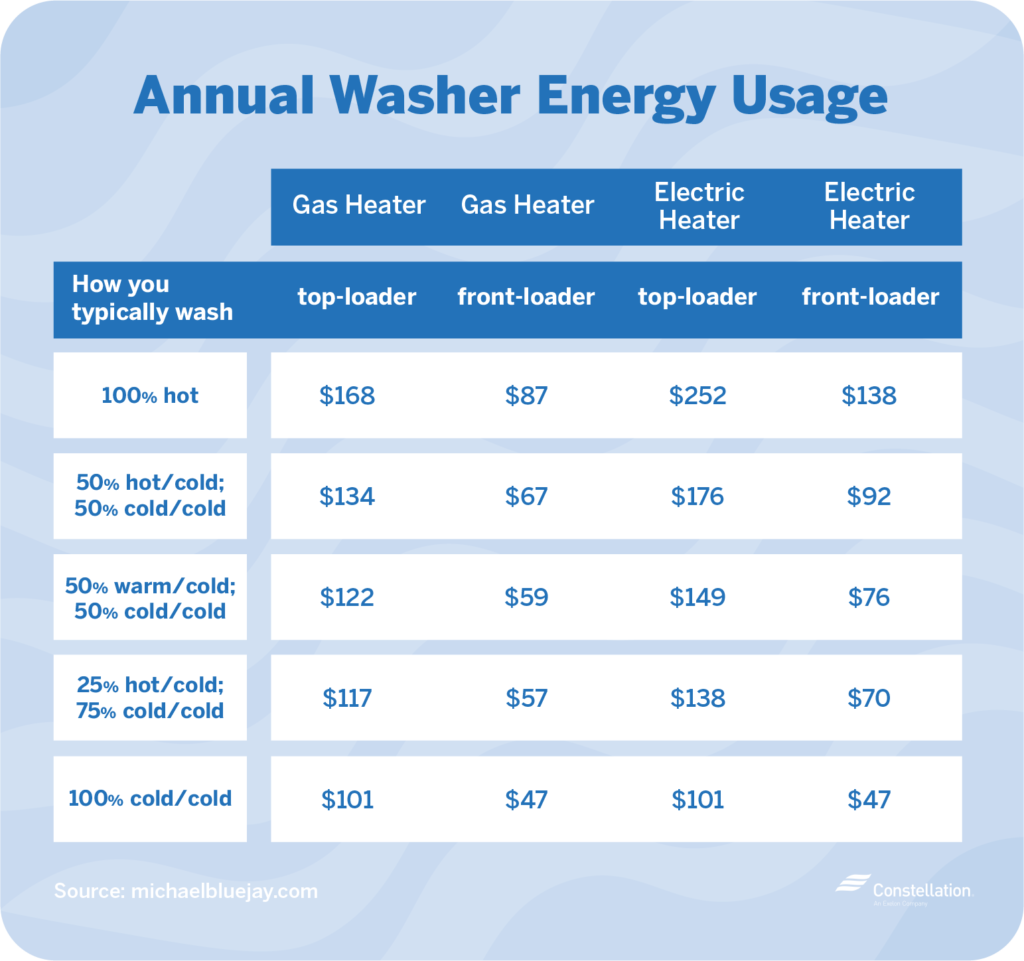
Understanding these numbers can guide you in choosing machines that save money and energy. For more on cycle times, visit how long is the wash cycle in a washing machine for detailed insights.
Wattage for Portable Washing Machines
Portable washing machines use less power than full-size models. Their wattage ranges from 350 to 500 watts. They are ideal for small spaces or low water use. Despite lower power, they can clean small loads efficiently.
Due to smaller load capacity, portable washers may require more frequent runs, which can add to total energy use. However, their energy efficiency and low standby power make them good for energy-conscious users. Checking power factor ratings can further help understand their electricity use.
Conclusion
Knowing how many watts a washing machine uses helps you manage energy and cost. Front load machines tend to be more energy-efficient than top load ones. Using cold water and full loads reduces power consumption. Standby power and water heater wattage also impact energy use.
Modern smart washing machines and energy-efficient models offer more ways to save electricity. Proper voltage and wiring ensure safe operation. Portable washers provide options for small homes with lower wattage needs.
By following energy saving washing tips, you can cut down your electricity usage and costs. For more tips on maintenance and energy use, explore how to clean odor from washing machine to keep machines running efficiently.
Frequently Asked Questions
What is the average wattage of a washing machine?
Most washing machines use between 400 to 1300 watts per cycle, depending on the model and load size.
Do front load washing machines use less energy than top load?
Yes, front load machines generally use less water and electricity than top load machines, making them more energy efficient.
How does washing machine standby power affect energy consumption?
Standby power can add up over time, consuming a small amount of electricity even when the machine is off, which impacts overall energy use.
What voltage is required for washing machines?
Most washing machines in homes run on standard voltage, typically 120 volts in North America and 220-240 volts in many other countries.
How can I reduce the electricity cost of using my washing machine?
You can save energy by using cold water cycles, running full loads, and choosing energy-efficient or smart washing machines.

Roger Jacobs is a seasoned appliance expert with over 15 years of experience in the washing machine industry. He specializes in product reviews, energy efficiency, and innovative washing technologies, providing users with trustworthy insights to make informed purchasing decisions.