How To Clean Mr Coffee Espresso Machine
Don’t be that guy. That guy with the gunked-up espresso machine.
Look, nobody wants to think about cleaning their espresso maker. Especially not their Mr. Coffee. It’s a pain. It’s tedious. But the alternative? That’s worse. Way worse. Forget that silky smooth crema. You’ll get sludge. And a taste that makes you question all your life choices. So let’s get this done. How to clean Mr Coffee espresso machine isn’t rocket science. But it ain’t gardening either. It takes a little elbow grease and a little know-how. I’ve seen machines that look like they’ve housed a small civilization of coffee bean mites. Honestly, it’s depressing. We’re talking about your morning ritual here. Don’t let it turn into a biohazard.
Why Bother? Seriously.
The thing is, coffee oils build up. Fast. They go rancid. They clog your machine. They mess with the temperature. They ruin the flavor. Every. Single. Time. You want good espresso, right? You paid for it. Don’t screw it up with neglect. Think about it: you wouldn’t pour fine single malt into a dirty glass. Same principle. Only, this is your caffeine fix. It needs to be clean. Period.
The Nitty-Gritty: Daily Habits That Matter
Okay, we gotta start somewhere. Daily stuff. This isn’t even the deep clean. This is just… not being a slob. It takes like, 90 seconds. Max.
Rinse and Repeat (Literally)
After every damn shot, rinse the portafilter. Get all that puck-y sludge out. Don’t let it dry and bake on there. It’s like concrete otherwise. Trust me on this. I once inherited a machine from a guy who clearly believed in letting his portafilter ‘cure’ overnight. Nasty.
Wipe the Wand, You Animal
Milk residue? If you steam milk? Wipe that wand down. Immediately. Use a damp cloth. If it dries, it’s a nightmare. A sticky, sour nightmare. That’s how you get funky smells. And worse, funky tastes in your next latte. Nobody wants that. I don’t care if you’re tired. Just do it.

Drip Tray Duty
Empty the drip tray. It gets gross. Full of… well, you know. Coffee water. Little grounds. Don’t let it overflow. It’s just gross. And it attracts pests. You want pests? Didn’t think so.
The Weekly Grind: More Than Just Coffee
Alright, you’ve done the daily stuff. Good for you. Now, once a week, let’s step it up. This isn’t the full-on descaling, but it’s important. It’s about keeping things… functional. And clean.
Portafilter Deep Dive
Soak your portafilter. And the brew basket. Use hot water. Add a little espresso machine cleaner. Or even a touch of dish soap. Just make sure you rinse it thoroughly afterward. Like, REALLY thoroughly. You don’t want dish soap tasting espresso. That’s just sad.
Shower Screen Scrub
That little metal disc inside the group head? The shower screen? Coffee grounds love to hide there. Use a brush. A stiff one. Scrub it. Get those grounds out. Make sure it’s clear. Water needs to flow freely. Otherwise, you get uneven extraction. And that means bad espresso. Simple as that.
Exterior Shine
Wipe down the whole machine. Use a damp cloth. Get rid of any coffee splashes. Fingerprints. Whatever. Make it look presentable. It’s not just about function. It’s about pride. Even if it’s just a Mr. Coffee.
The Big Kahuna: Descaling Your Mr. Coffee Espresso Machine
This is the main event. This is where the real magic happens. Or doesn’t happen, if you don’t do it. Descaling. It’s about removing mineral buildup. From your water. It gets in the heating element. It gets in the pipes. It’s nasty. You need to do this every 1-3 months. Depends on your water hardness. Hard water? Do it more often. You’ll notice it’s taking longer to heat up. Or the steam pressure is weak. That’s the signal. Don’t ignore it.
What You’ll Need for Descaling: The Arsenal
Don’t wing this. Get the right stuff. Or improvise like a madman, but I wouldn’t recommend it.
Descaling Solution
Get a commercial descaling solution. Designed for espresso machines. Follow the instructions. Seriously. Don’t just dump half a bottle in. They usually come in small packets. Like for $5-$10 a pop. Cheaper than a new machine, right? Some people use vinegar. They swear by it. Vinegar works. But it can leave a residue. And a smell. That takes ages to get rid of. Commercial solutions are usually citric acid-based. They work well. And they rinse out cleaner. Look for stuff that’s safe for espresso machines. Don’t use anything harsh. No bleach. No ammonia. Are we clear?
Water
Clean water. Obviously. Filtered is best. But tap water is fine if that’s all you got. Just make sure it’s… water.
A Bowl or Container
For the dirty water. Something big enough to catch drips. And maybe the whole portafilter if you’re cleaning that too.
A Cloth or Sponge
For wiping down. Again. Basic stuff.
The Descaling Process: Step-by-Step (No Excuses)
Okay, deep breaths. It’s not that bad. Just follow the damn steps.
Step 1: Empty Everything
Make sure the machine is unplugged. And cool. Empty the water reservoir. Empty the drip tray. Remove any grounds. Coffee grounds. Old water. All of it. Get it clean. Start fresh.
Step 2: Mix the Solution
Follow the instructions on your descaling solution. Usually, it’s like one packet to a full reservoir of water. Or a specific ratio. Don’t guess. Measure it. Stir it. Make sure it’s dissolved. This is crucial for your Mr Coffee espresso machine’s health.
Step 3: Run the Solution Through
Pour the mixed solution into the water reservoir. Put the empty portafilter back in. Or just run it through the group head without the portafilter if your machine allows. Now, turn the machine on. Run a brew cycle. Let it run about half the solution through. Turn the machine off. Let it sit for like 15-30 minutes. This gives the solution time to work. To break down that scale. Patience, grasshopper.
Step 4: Flush the Steam Wand (If Applicable)
If you have a steam wand, run some of the solution through it too. Turn on the steam function. Let it blast for a minute. This cleans out the milk lines. Gets rid of any internal gunk. Be careful, it’s hot.
Step 5: Finish the Brew Cycle
Turn the machine back on. Run the rest of the solution through. Another brew cycle. Just let it all drip out. Into your bowl. Or sink. Don’t drink this. Obviously.
Step 6: Rinse, Rinse, Rinse!
This is the MOST important part. You gotta get all that descaling solution out. Empty the reservoir. Fill it with fresh, clean water. Run a full brew cycle. Let it all go through. Then, empty it again. Fill it with fresh water. Run another full brew cycle. Do this at least twice. Maybe three times. Seriously. You want ZERO taste of the descaler. If you can taste it, you didn’t rinse enough. I’ve seen people skip this. They wonder why their coffee tastes like chemicals. Idiot.
Step 7: Clean the Removable Parts
While it’s rinsing, wash the portafilter, brew basket, and drip tray. Use warm, soapy water. Rinse them well. Dry them off. Make sure they’re completely dry before putting them back.
Step 8: Final Wipe Down
Wipe down the exterior again. Make sure everything is clean and dry. And shiny. A thing of beauty. Ready for another month. Or three.
Troubleshooting: When Things Go Sideways
Even with cleaning, sometimes things act up. It happens.
Machine Won’t Heat Up Properly
This screams scale buildup. If you’ve descaled and it’s still slow, you might have a more serious issue. But usually, descaling fixes it. Did you actually DESCALE? Like, properly?
Weak Steam Pressure
Again. Scale. It clogs the steam wand and the internal tubing. Descale. And make sure the steam wand tip isn’t blocked. Those little holes get clogged with milk. Poke them out with a needle or a fine wire.
Leaking Water
Check the seals. The group head gasket. The portafilter seal. Make sure the portafilter is locked in tight. Sometimes the drip tray is just full. Empty it, genius.
Strange Noises
Gurgling? Normal. Grinding? Not normal. Could be a pump issue. Or something seriously clogged. Descaling is your first bet. If that fails, time to call support. Or buy a new one. Honestly, some of these older Mr. Coffee machines aren’t worth fixing.
How Often Should I Really Clean This Thing?
Look, I get it. You want a number. A date on the calendar. The truth is, it depends.
Daily: Rinse portafilter, wipe steam wand, empty drip tray. Every. Single. Day. This is non-negotiable. It’s 90 seconds. Do it.
Weekly: Deeper clean of portafilter, basket, shower screen, exterior wipe. This is a 5-minute job. Max. Don’t skip it.
Monthly/Quarterly: Descale. This is the big one. 1-3 months. Use your judgment. Water hardness is the key factor. If your coffee tastes off, or the machine is slow, DESCALE. Don’t wait for the moon to align.
A Quick Look at Cleaning Frequency (Don’t Overthink It)
| Task | Frequency | Time Commitment |
|---|---|---|
| Rinse Portafilter | After Every Use | 15 Seconds |
| Wipe Steam Wand | After Every Use | 15 Seconds |
| Empty Drip Tray | Daily | 30 Seconds |
| Portafilter/Basket Soak | Weekly | 5 Minutes (Active Cleaning) |
| Shower Screen Scrub | Weekly | 1 Minute |
| Exterior Wipe | Weekly | 1 Minute |
| Full Descale | Every 1-3 Months | 30-45 Minutes (Active Process) |
The thing is, consistent small efforts prevent big headaches. A little maintenance goes a long way. It saves you money. It saves you frustration. And most importantly, it saves your coffee. Your precious, hard-earned caffeine.
The Bottom Line: Your Coffee Deserves Better
So there you have it. How to clean Mr Coffee espresso machine. It’s not glamorous. But it’s necessary. Your machine is an investment. Treat it right. Keep it clean. Your taste buds will thank you. And you won’t have to explain to guests why your espresso tastes like despair. Honestly, a little effort now saves a lot of trouble later. Get cleaning.
Frequently Asked Questions
What is the best descaler for a Mr Coffee espresso machine?
Commercial descaling solutions specifically designed for espresso machines are generally the best option. They are formulated to be effective against mineral buildup without damaging the internal components. Look for products based on citric acid. While vinegar can work, it often leaves a lingering odor and taste that’s hard to remove, and some manufacturers advise against it.
Can I use vinegar to descale my Mr Coffee espresso machine?
Yes, you can use vinegar, but it’s not ideal. A 50/50 solution of white vinegar and water is often recommended. However, vinegar can leave a strong smell and taste that requires extensive rinsing to remove. It can also potentially degrade rubber seals or plastic components over time more than dedicated descalers. If you do use vinegar, be prepared for extra rinsing cycles.
How often should I descale my Mr Coffee espresso machine?
The frequency depends heavily on your water hardness. For areas with hard water, descaling every 1-2 months is recommended. For areas with soft water, every 3-4 months might suffice. Signs like slower heating, weaker steam, or inconsistent brewing indicate it’s time to descale, regardless of the schedule.
What happens if I don’t descale my Mr Coffee espresso machine?
If you don’t descale, mineral deposits will build up inside your machine. This can lead to reduced heating efficiency, weaker steam pressure, inconsistent water flow, and ultimately, poor-tasting espresso. In severe cases, the buildup can permanently clog and damage the heating element or internal tubing, shortening the lifespan of your machine.
How do I clean the steam wand on my Mr Coffee espresso machine?
After every use, immediately wipe the steam wand with a damp cloth to remove milk residue. If milk dries on, soak a cloth in hot water and wrap it around the wand for a few minutes before wiping. For deeper cleaning, run some hot water or a small amount of descaling solution through the wand. Ensure the small holes at the tip are clear; you can use a needle or a specialized cleaning brush if they become clogged.
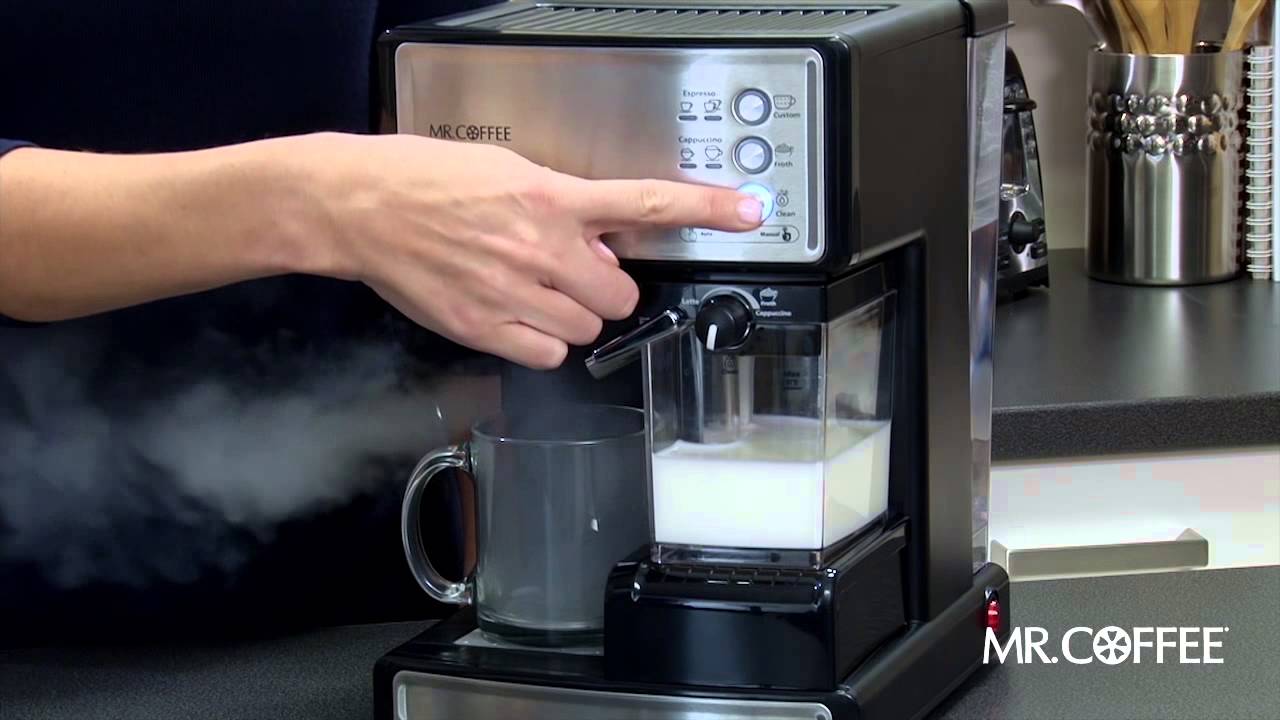
Watch: Mr. Coffee® Espresso Machines. – Cleaning your Espresso …