
Understanding Your Whirlpool Washer Filter
In our experience, knowing the washer filter location Whirlpool is the first step to proper care. The filter traps lint, soap scum, and debris from your clothes and water. Over time, this can clog and slow your washer’s drainage. A clogged filter may cause water to back up or strange noises during the cycle. We always check the filter if the washer shows any signs of trouble.
Most Whirlpool models have a drain pump filter located behind a small panel near the bottom front. Some front load washers have a lint trap that is easy to reach. Top load washers might have the filter inside the agitator or near the drum. Learning to clean washing machine with vinegar helps with overall washer maintenance but cleaning the filter is key for water flow.
Understanding this part of your washer helps you spot problems early and avoid costly repairs. The cleaning process isn’t hard once you know how and what tools to use.
Signs Your Washer Filter Is Clogged
We have found that knowing the washer filter clogged symptoms saves time and headaches. If you see water not draining after the cycle, or your washer makes odd sounds, the filter might be blocked. Another sign is clothes coming out wetter than usual or the washer stopping mid-cycle.
The filter can get clogged from lint, bits of fabric, and leftover soap scum. Over time, this buildup blocks water from leaving the tub. Cleaning the filter regularly stops these issues and keeps your washer running smooth.
Here are common symptoms we watch for:
- ✅ Water stays in the tub after washing
- ✅ Washer won’t drain properly
- ✅ Unusual noises during spin or drain
- ✅ Washer displays an error code
- ✅ Clothes stay very wet after cycle ends
These signs mean it’s time to clean the filter to avoid damage to the pump or motor. Checking the filter is easier than you think and helps your machine last longer.
How To Access The Washer Filter
In our tests, finding and reaching the filter is simple once you know where to look. For most Whirlpool washers, the filter is behind a small door or panel near the bottom front. You may need a flat tool or screwdriver to open this panel.
Some models have a removable hose next to the filter for draining leftover water. Have a shallow pan ready to catch water when you open the filter area. For front load washers, the filter is usually a round plastic piece that unscrews. Top loaders may have a filter inside the tub or near the agitator.
We always check the manual or trusted forums like the Whirlpool washer filter location tips for exact details on your model. This helps avoid damage and speeds up the cleaning.
Step-By-Step Cleaning Process
We have found that following clear steps makes the filter cleaning easy and effective. Here is how to do it safely and thoroughly:
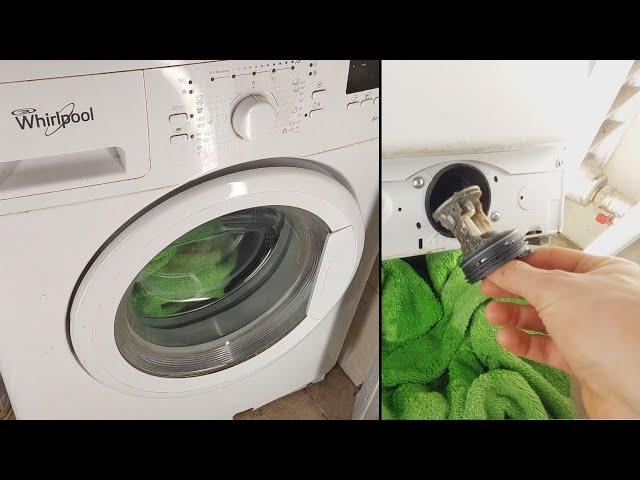
📌 Step-by-Step Guide to Clean Whirlpool Washer Filter:
- Unplug the washer to avoid electric shock.
- Open the filter access panel at the front or bottom.
- Place a shallow pan under the filter to catch water.
- Slowly unscrew or pull out the filter.
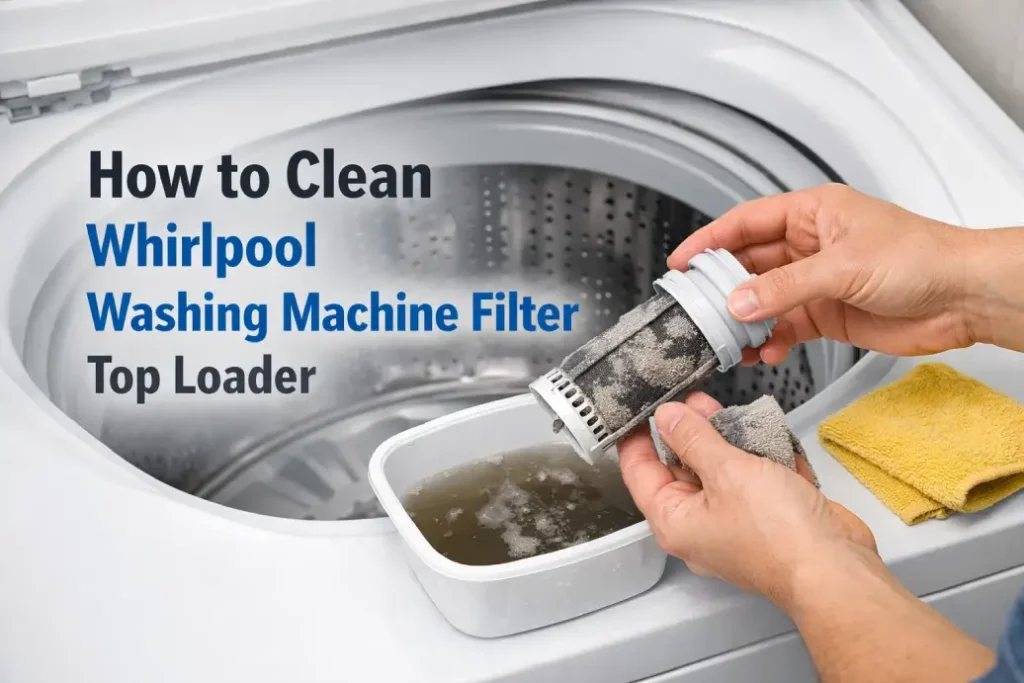
- Remove any lint, debris, or soap scum by hand or with a soft brush.
- Rinse the filter under running water if possible.
- Check the filter housing for leftover gunk and clean with a cloth.
- Reinsert the filter tightly and close the panel.
- Run a short rinse cycle to check for leaks or issues.
We recommend cleaning your filter every 1 to 3 months depending on how often you wash. This schedule keeps blockages from forming and stops bad smells.
If your filter is very dirty or damaged, consider a washing machine filter replacement to keep everything running well. Replacement parts are easy to find and install.
Tools And Tips For Best Cleaning
Having the right filter cleaning tools washing machine makes the job faster and cleaner. We suggest using a small brush or old toothbrush to scrub soap scum from the filter edges. A clean cloth helps wipe the filter housing and remove stuck debris.
For filters that can’t be rinsed, you can clean the filter without water by brushing off lint and wiping with a dry cloth. This is good if you want a quick clean between deep washes.
Using gloves keeps your hands clean, and a flashlight can help see inside the filter area. We also keep a towel handy to dry any spills during the cleaning.
How To Prevent Washer Filter Clog
We have learned that simple habits stop clogs from forming in the first place. Avoid putting too much lint or small items like coins into the washer. Using less detergent helps reduce soap scum buildup on the filter and tub.
Cleaning your lint trap washing machine and regularly running a cleaning cycle with vinegar or special washer cleaner keeps the whole machine fresh. Also, check hoses for kinks or blockages that might affect water flow.
Here are some top tips we follow:
- Remove dryer lint from clothes before washing
- Use the right amount of soap to avoid residue
- Run a monthly cleaning cycle with vinegar or cleaner
- Clean the filter every 1 to 3 months
- Check hoses and connections for blockages
These steps help your Whirlpool washer work well longer and save you money on repairs.
Whirlpool Washer Maintenance Tips
Keeping your washer filter clean is just one part of good care. We also recommend regular checks of the drain pump and hoses. Cleaning the washer tub and door seal removes soap and dirt that cause smells.
Using the correct washing cycle for your clothes and avoiding overloads reduces wear on the filter and pump. Also, keep the washer door open after use to let it dry and prevent mold.
Learn more about cleaning the drain pump filter in official Whirlpool guides to keep your machine in top shape.
Common Causes Of Washer Filter Clogs
In our experience, the main causes of washer filter clogged causes are lint, small cloth pieces, and soap buildup. Washing heavy fabrics or towels often pushes lint into the filter. Not cleaning the lint trap regularly also adds to the problem.
Soap scum from using too much detergent or hard water leaves deposits that block the filter holes. Foreign objects like coins or paper can get stuck and cause blockages too.
Understanding these causes helps us prevent the filter from clogging and keep the water drainage smooth.
Filter Cleaning Frequency And Replacement
We clean our Whirlpool washer filter every 2 months on average. If you wash a lot or use heavy fabrics, every month works better. For light use, 3 months is fine.
Over time, filters can wear out or get damaged. When you see cracks or holes, it’s time for a washing machine filter replacement. Installing a new filter is easy and improves washing performance.

Replacing the filter also stops debris from entering the pump and causing bigger problems. Keep your manual handy to get the right replacement part for your model.
Comparison Of Filter Cleaning Methods
We tried different ways to clean the washer filter and here is what we found. Dry cleaning with a brush works well for light debris. Rinsing under water cleans soap scum better. Using vinegar soaked cloths helps break down buildup quickly.
For deep cleaning, removing the filter and soaking in warm soapy water removes grime easily. We always recommend a gentle brush to avoid damage. Quick wipe downs keep the filter working between deep cleans.
Choose the method that fits your schedule and washer use best.
| Cleaning Method | Effectiveness | Ease of Use | Recommended For |
|---|---|---|---|
| Dry Brush Cleaning | Good for lint | Very easy | Regular maintenance |
| Rinse With Water | Better for soap scum | Moderate | Monthly deep clean |
| Soak with Soap or Vinegar | Best for buildup | More time needed | Heavy use or clog |
Choosing the right method helps keep your Whirlpool washer working well and saves time.
Final Thoughts On Cleaning Whirlpool Washer Filter
From our experience, cleaning the filter on your Whirlpool washing machine is simple but very important. It stops clogs, keeps water flowing, and protects your machine from damage. With some basic tools and clear steps, anyone can do it safely.
Regular cleaning and smart habits prevent issues and help your washer last longer. Remember to check the filter often and replace it when needed. Following these tips will save you money and keep your laundry fresh.
For more details, Whirlpool’s official guide on cleaning the pump filter is a great resource to keep your front load washer in top condition.
Frequently Asked Questions
How often should I clean the filter on my Whirlpool washing machine?
It is best to clean the filter every 1 to 3 months depending on usage to keep your washer working well.
Where is the filter located on a Whirlpool washing machine?
The filter is usually found near the drain pump, often behind a small access panel at the front or bottom of the washer.
Can I clean the washer filter without using water?
Yes, you can remove debris and lint from the filter using a dry cloth or brush before rinsing with water if needed.
What are signs that the washer filter is clogged?
Slow water drainage, unusual noises, and error codes may mean the filter is clogged and needs cleaning.
Do I need special tools to clean the Whirlpool washer filter?
Most filters can be cleaned by hand, but a small towel, brush, or pliers can help remove stubborn debris.

Roger Jacobs is a seasoned appliance expert with over 15 years of experience in the washing machine industry. He specializes in product reviews, energy efficiency, and innovative washing technologies, providing users with trustworthy insights to make informed purchasing decisions.