
Understanding Washing Machine Amperage 🚀
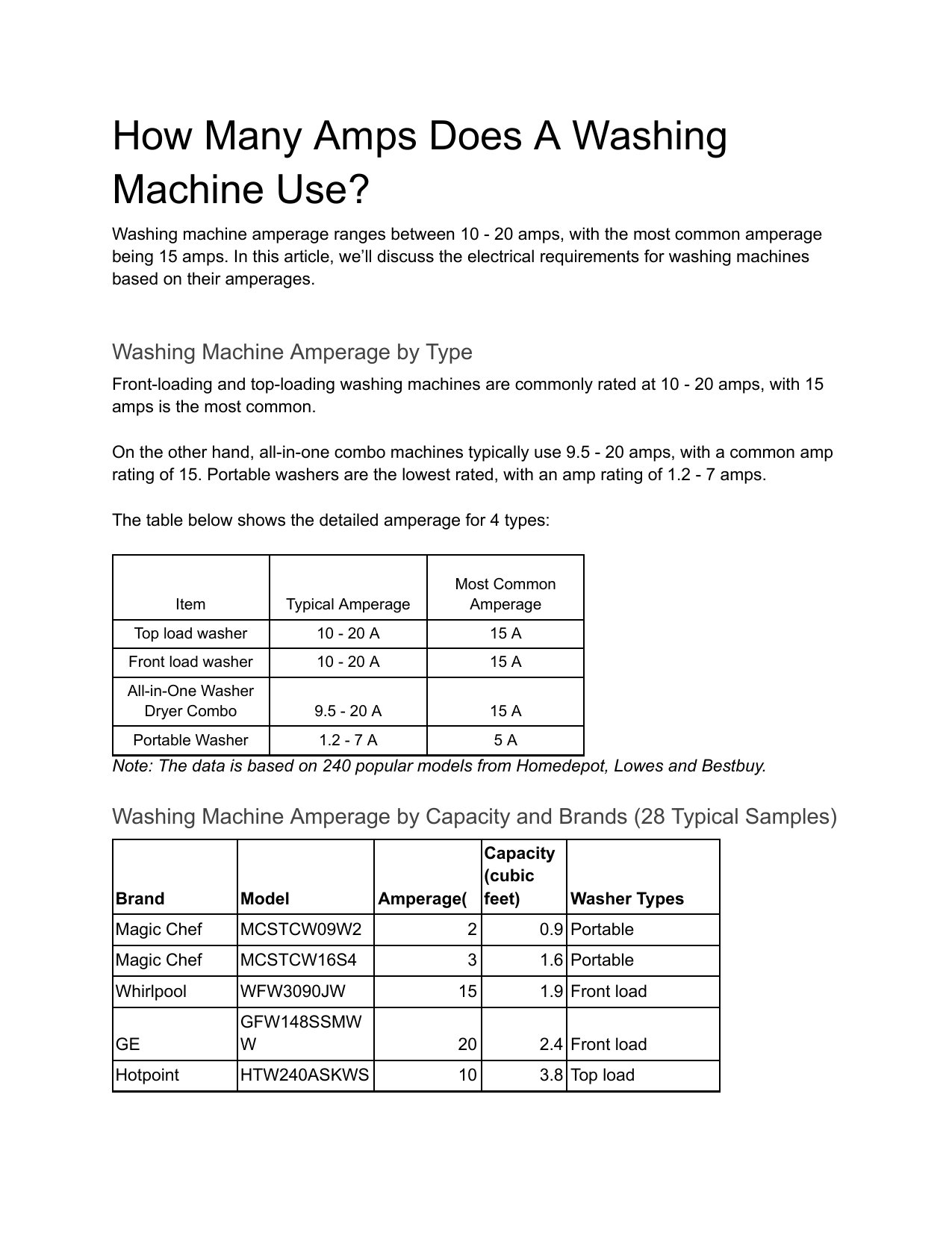
Washing machine amperage is the amount of electrical current the machine uses to work. It is measured in amps. Knowing the amps a washer draws is key to proper electrical setup and safety. Most home washers run on 120 volts and use between 5 and 15 amps.
Amperage depends on the motor size and features like heating elements or extra spin cycles. A larger load or more functions usually mean higher amps. For a deeper understanding of this mechanic, analyzing resources on washing machine current draw provides excellent foundational context.
Proper knowledge helps avoid electrical problems and ensures your washing machine runs efficiently. It also guides choosing the right circuit breaker and wiring specs.
To learn more about the length of washing machine cycles and how they affect power, check our detailed guide on washing machine wash times.
Washer Power Consumption and Circuit Breaker Size 📑
Power consumption depends on the amperage and voltage. Washing machines usually operate at 120 volts. For example, a washer drawing 10 amps uses about 1200 watts (10 amps × 120 volts). This number helps calculate energy use.
Choosing the right circuit breaker is vital. Most washers use a 15-amp breaker. Heavy-duty or commercial washers might need a 20-amp breaker. Using the wrong breaker risks tripping and fire hazards.
Always follow local electrical codes when installing a washing machine circuit. Safety devices like GFCI outlets are often required to prevent shocks.
The table below shows typical amperage and breaker sizes for common washer types.
| Washing Machine Type | Typical Amps | Voltage (Volts) | Circuit Breaker Size (Amps) |
|---|---|---|---|
| Standard Top Load | 8-12 | 120 | 15 |
| High-Efficiency Front Load | 5-10 | 120 | 15 |
| Heavy Duty / Commercial | 12-15 | 120 | 20 |
Choosing a breaker with a proper size protects wiring and appliances. It also affects safety and power delivery.
Many washers have a fuse or breaker inside their electrical rating label. This fuse size should be matched with the home circuit for safety.
Electrical Wiring and Outlet Specifications ⚖️
Washing machine wiring must meet safety rules. Usually, a 14-gauge wire is used for 15-amp circuits. For 20-amp circuits, 12-gauge wire is typical. Proper wiring reduces fire risk and power loss.
Outlets for washers are usually grounded 120-volt outlets. Modern codes often require GFCI for these circuits. This protects users from electric shocks, especially in wet laundry areas.
Using the right plug type and outlet is essential. A dedicated washer machine receptacle is recommended to keep circuits safe and avoid overloads. For more details, the discussion on dedicated washer machine receptacle explains these needs well.
Incorrect outlets or wiring may cause breaker trips or damage. Always have a licensed electrician check your setup.
Washing Machine Motor Amperage and Electrical Load ⭐
The motor inside a washing machine is the main electrical load. It controls drum rotation and spin speed. Motor amperage varies with load size and cycle type.
Newer energy-efficient washers have motors that use less current. This lowers power consumption but still gives strong cleaning power. Motor amperage is often listed on the appliance electrical rating label.
Calculating the total electrical load helps prevent overloads. Add all appliances on the same circuit to check if the breaker is enough. This is called appliance load calculation and is part of residential electrical code.
Keeping electrical load balanced improves safety and machine life. Overloaded circuits can cause breakdowns or hazards.
Installation Guide for Washing Machine Electrical Requirements 📌
Installing a washing machine involves more than just plugging it in. Follow these steps to ensure safe and correct electrical setup.
- Check the washing machine’s electrical rating label for voltage and amperage.
- Use a dedicated 15-amp or 20-amp circuit breaker as needed.
- Install proper gauge wiring: 14-gauge for 15-amp, 12-gauge for 20-amp circuits.
- Use a grounded 120-volt outlet with GFCI protection.
- Ensure no other heavy appliances share the circuit.
- Test the outlet for proper voltage and grounding before plugging in.
- Secure the power cord and avoid extension cords.
These steps follow household appliance amperage requirements and electrical safety standards. A professional electrician should perform or inspect installation.
Proper installation avoids breaker trips and protects users from shocks or fires.
Comparing Washing Machine and Dryer Amperage 🆚
Dryers usually need more power than washers. Typical dryers run on 240 volts and draw between 20 and 30 amps. Washers operate at 120 volts and draw less current.
This difference means washer and dryer circuits are separate. Combining them risks overloads and safety problems. The table below compares amps and voltage for these appliances.
| Appliance | Voltage (Volts) | Typical Amps | Circuit Breaker Size (Amps) |
|---|---|---|---|
| Washing Machine | 120 | 5-15 | 15-20 |
| Electric Dryer | 240 | 20-30 | 30-40 |
Each appliance needs its own circuit with correct wiring and breaker. This ensures safe and efficient operation.
For more on electrical safety and appliance amps, visit the guide on dedicated washing machine circuits.

Washing Machine Energy Use and Efficiency ✅
Amperage affects energy use, but efficient washers use less current while cleaning well. Energy-efficient models lower power consumption by using smart motors and sensors.
Choosing a washer with a low power rating reduces electricity bills. It also lowers the electrical load on your home’s system.
To save energy, run full loads and use cold water cycles when possible. These habits cut power use without hurting cleaning quality.
Understanding washing machine electrical requirements helps pick the right model for your home and budget.
Safety Tips for Washing Machine Electrical Setup 💬
Safety is key for all electrical appliances. Follow these tips for your washing machine:
- ✅ Always use a dedicated circuit breaker.
- ✅ Check wiring and outlet condition regularly.
- ✅ Use GFCI outlets in wet areas.
- ✅ Don’t use extension cords or power strips.
- ✅ Turn off power before servicing the machine.
- ✅ Keep the power cord away from water.
These steps prevent shocks, fires, and damage. Proper setup and regular checks keep your washer safe and reliable.
For a full safety checklist and troubleshooting, consult your washing machine’s manual and local electrical codes.
Conclusion
Understanding how many amps a washing machine uses is vital for safe and effective operation. Most home washers need between 5 and 15 amps on a 120-volt supply. Proper circuit breaker size is usually 15 amps but can be 20 for heavy-duty models.
Ensuring correct wiring, outlet type, and safety devices like GFCI is key. A dedicated circuit prevents overloads and hazards. Motor amperage impacts power use and energy efficiency, so choosing the right model matters.
Always follow local electrical codes and consider professional installation to keep your washing machine safe. By managing electrical load correctly, you protect your home and get the best washer performance.
Frequently Asked Questions
How many amps does a typical washing machine draw?
A typical washing machine draws between 5 to 15 amps depending on its size, motor type, and features.
What size circuit breaker is needed for a washing machine?
Most washing machines require a 15-amp circuit breaker, but some heavy-duty models may need 20 amps.
Do washing machines need a dedicated circuit?
Yes, industry standards recommend a dedicated circuit for washing machines to prevent overloads and ensure safety.
Can I use a regular electrical outlet for my washing machine?
Most washing machines use a standard 120-volt outlet, but it should have proper wiring and a ground fault circuit interrupter (GFCI) for safety.
How does washing machine amperage affect energy use?
Higher amperage means more electrical current, which can increase power consumption, but energy-efficient models optimize usage to save electricity.

Roger Jacobs is a seasoned appliance expert with over 15 years of experience in the washing machine industry. He specializes in product reviews, energy efficiency, and innovative washing technologies, providing users with trustworthy insights to make informed purchasing decisions.